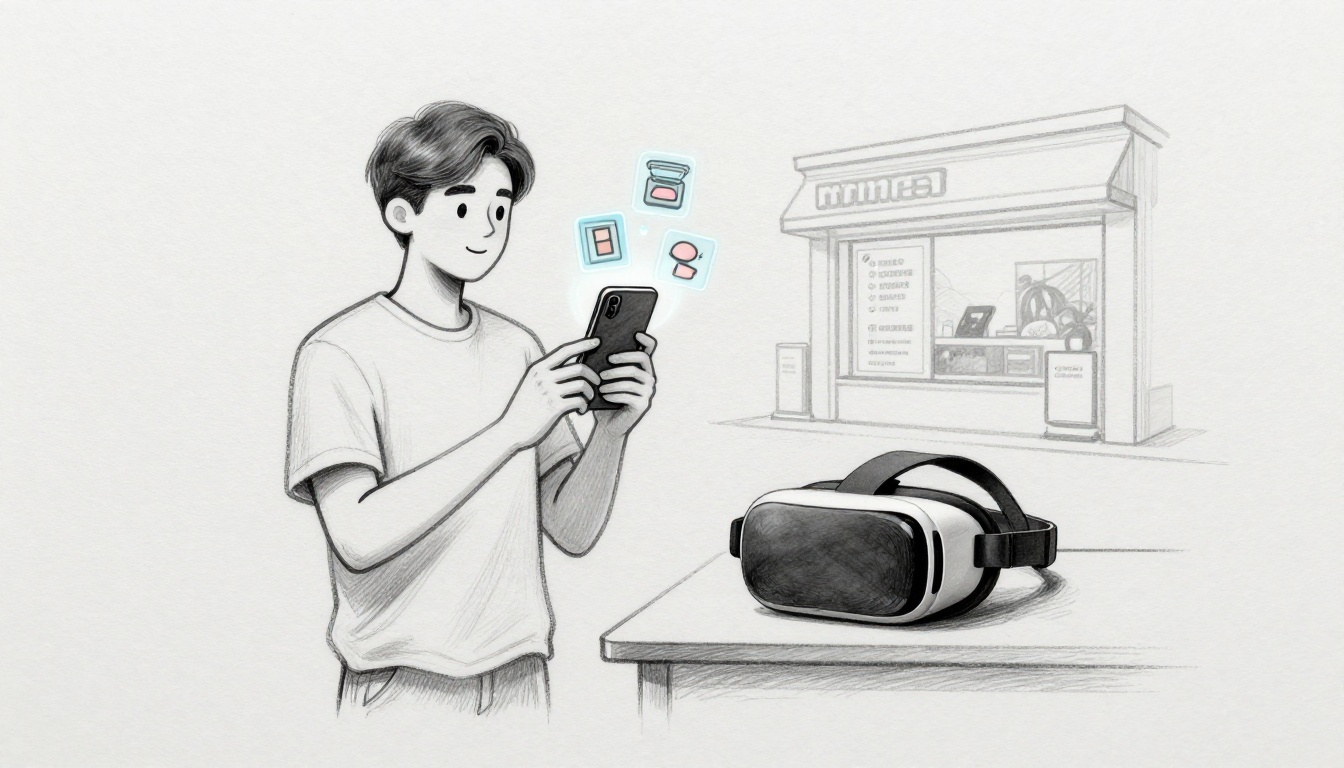
Ever checked your phone camera for makeup shades before you buy? Or tried a VR game after dinner just to shut your brain off? That small moment hints at what VR (virtual reality) and AR (augmented reality) are doing to daily life.
VR puts you inside a mostly digital world, usually with a headset. AR overlays digital info on your real world, like through phone camera apps or smart glasses. In 2026, both are getting more practical because headsets are lighter, wireless designs are better, and AI features make experiences feel more responsive.
So what changes for real people? You get new ways to play, learn, train for work, shop with less guessing, and stay in touch. You also face real trade-offs, like comfort issues and privacy questions.
Next, you’ll see how VR and AR show up in fun time, school and healthcare, everyday tasks, and social life, plus what comes next.
Turning Games, Movies, and Outings Into Thrilling Adventures
Free time used to mean “pick something and hope it’s worth it.” Now VR and AR can turn normal nights into something you feel in your body.
VR gaming is still one of the fastest ways people try immersive tech. Better visuals, smoother motion, and more room-scale tracking make VR feel less awkward than it did years ago. At the same time, developers use powerful tools like Unreal Engine to build walkable worlds that feel bigger than your living room. Market forecasts also back up the hype. For example, the VR gaming market could reach $92.3 billion by 2027, and headset shipments are forecast to jump from 14.3 million units to 87.7 million in 2026 (over six times). That growth matters because more titles and better hardware usually show up for everyday users first.
If you want a broader read on how immersive play is changing in 2026, see VR and AR gaming in 2026.

Meanwhile, AR tends to fit into real life more naturally. It can add filters to a phone camera, show instructions over a kitchen project, or turn a boring wait into a playful scene.
And outings? They get extra layers. Instead of choosing between “staying home” and “going out,” AR can make events interactive, while VR can give you a front-row feel from your couch.
Gaming That Pulls You Right In
VR gaming can feel like stepping through a doorway. Your brain treats the virtual world as “space you’re in,” which is why it works so well for stress relief. You’re not just watching. You’re dodging, aiming, moving, and responding.
In 2026, one big daily-life improvement is that headsets are lighter and more wireless. That means less fiddling, fewer long breaks, and easier “quick session” nights. You might still play for longer, but you can also jump in for 15 or 20 minutes.
Social VR also changes how you spend time with friends. Instead of voice-only chats, you can stand near each other in a shared space. That can reduce the “distance problem” that hits when friends live far apart.
Of course, comfort matters. If you’re prone to motion sickness, you might start with seated games. You can also pick titles with smoother locomotion options.
Movies and Virtual Events from Anywhere
VR turns “watching” into “being there.” If a concert or sports event has a 360-degree mode, VR can place you in a virtual seat with a front-row view.
AR adds a different flavor. It’s less about total immersion and more about making your day playful. Think of AR filters that follow your face while you video chat, or AR overlays that add fun effects to everyday photos.
And virtual events are not only for “big moments.” Some people use VR for book clubs, group hangouts, and live Q and A sessions. Once you try it, you might start planning evenings around what’s happening, not around what you have time to travel to.
Theme Parks with Interactive Twists
Theme park days still beat virtual life for many people. However, AR can extend the experience. Some attractions use phone-based AR to add characters, effects, or extra interactions as you move through the park.
That changes the feel in two ways. First, the experience becomes more repeatable. You can relive parts of it at home by using the same app or by recreating similar scenes with your phone camera. Second, the park becomes more “personal,” since your actions can shape what you see.
Even if you never wear a headset, AR can add that “something is happening” spark to weekend outings.
Making School and Medical Training Way More Effective
Here’s a surprising truth: VR and AR can make learning feel less like memorizing and more like doing.
In education, VR can place students inside a scene. AR can bring lesson content into the real classroom. Together, they help students connect ideas to real shapes, real scale, and real movement.
In healthcare training, the value is even clearer. Practicing procedures on real patients is risky. VR creates safe practice runs, so students improve their skills without pressure.
For more on how immersive learning is used and measured, check VR immersive learning statistics.

And because adoption keeps spreading, more schools and training programs in the US are adding XR tools in regular lessons, not just special demos.
Bringing Lessons to Life in Classrooms
Imagine standing in ancient Rome or watching biology unfold right where you sit. That’s what AR can do when it overlays 3D models onto your classroom view.
Some schools use VR and AR for STEM lessons. Students might hold virtual molecules or explore engines in 3D. Others use classroom sets like ClassVR-style devices for different subjects, including drama and music activities. Teachers also report better engagement. In one set of findings, 82% of high school teachers said XR delivers top-quality lessons, and two-thirds want it used regularly.
The daily impact shows up in homework and tests. When students understand concepts through visuals and interaction, they remember faster. Also, it helps when a student learns best by doing, not by reading a page twice.
Still, tools won’t replace teachers. They work best when teachers guide what students look for, then tie the experience back to the lesson goal.
Safe Practice for Doctors and More
Healthcare training is where VR and AR move from “cool” to “serious.” Doctors and medical students can practice steps, repeat difficult parts, and build confidence.
Osso VR is one example used in orthopedics training. Research has reported major gains, including a study where VR learners hit a 75% completion rate for a procedure, compared to 25% with a technique guide. Another UCLA study reported 130% to 230% higher proficiency scores, with faster completion and more correct steps.
Those numbers matter because mistakes can be costly. VR practice can reduce mistakes before real-world work begins.
Then there’s AR for the job itself. Some industrial and medical workflows use AR overlays to display guides and diagrams in real time. That reduces “check the paper again” moments and helps experts stay focused on the task.
In daily terms, this can mean safer care. It can also mean faster training pipelines for new clinicians and technicians.
Simplifying Work, Shopping Trips, and Getting Around
After fun time and learning, the biggest everyday shift is practical: less guesswork.
AR can help you “see” the next step. VR can train you before you ever handle equipment. And both can reduce errors in routines you do repeatedly.
One reason the space keeps growing is that the combined AR/VR market is projected to reach about $74.3 billion in 2025 and rise toward around $200 billion by 2030. That kind of growth usually shows up in everyday apps first, not only in lab settings.
Teamwork That Feels Face-to-Face
Remote work can feel distant. AR-based collaboration aims to shrink that gap.
Picture a shared workspace where people point, mark up models, and review parts in the same 3D view. Instead of explaining every detail over chat, a teammate can show what they mean in a way that looks obvious.
In industry training and manufacturing, XR can also reduce mistakes. When workers practice steps with guided overlays, the process becomes easier to follow. As a result, teams can move faster and spend less time fixing issues later.
So even if you never use a headset at home, you may benefit from XR work happening behind the scenes at your workplace or in the services you rely on.
Try Before You Buy Virtually
Shopping is where AR can save both time and money. With WebAR, you can preview products right through your phone camera browser, without downloading a special app.
Two popular examples are furniture and makeup try-ons. IKEA’s Place app uses AR to show furniture at real size in your room. Reports say it can cut returns by 25% to 40%, because buyers can confirm fit before they order. Sephora’s Virtual Artist lets you test shades on your face, and it’s been linked to a 31% sales lift and fewer returns by helping shoppers choose better.
If you’re curious about WebAR versus app-based AR, see WebAR vs native AR.

That helps daily life in a simple way. You spend less time wondering, and you spend more time choosing with confidence.
Effortless Directions Overlayed on Your View
Navigation is one of AR’s clearest use cases. Instead of reading a tiny screen, you might get arrows and guidance aligned with what you see.
Car makers have already experimented with this style of guidance. The point is to cut wrong turns and reduce “Wait, which street is that?” moments. For daily commutes, that can make a big difference in stress.
Still, AR directions need good mapping and reliable tracking. So the best setup is when you also keep your normal navigation backup on. Think of AR as a helpful assistant, not your only plan.
Strengthening Friendships and Tackling Tough Spots
Human connection is one area where VR feels both promising and complicated.
On the upside, social VR can make distance smaller. When friends share a virtual room, conversations can feel more present than a call. Eye tracking and face expression help too, so people can read emotion better than text ever does.
On the downside, comfort and privacy still matter. Wearing gear for long stretches can feel heavy. Also, social VR platforms handle data in ways that should make you pay attention.
Virtual Hangouts That Feel Real
Virtual hangouts show up in everyday life when friends can’t meet in person. Maybe it’s a busy schedule, a long commute, or health limits.
In VR, avatars bring movement and nonverbal cues back into the conversation. You can sit across from someone, gesture, and react in real time. That can fight loneliness, especially when remote life makes you feel cut off.
AR also supports connection through simple, fun moments. Think about AR filters used during video calls or short clips. They don’t replace friendship, but they make shared moments easier to start.

Fixing the Growing Pains
VR comfort has improved, but it’s not perfect.
Some people struggle with weight, heat, or “too long” sessions. In response, manufacturers focus on lighter designs and better displays. Meanwhile, battery life is a key issue for wireless setups. Companies also add features that reduce system load, since overheating and drain can ruin a good experience.
Then there’s the real-world side of social tech, which is privacy. If cameras and sensors track your face, your movements, or your room, you need to understand what’s being stored and why.
As AR expands into daily life, it makes sense to ask how it’s used beyond fun. For a broader look at where AR shows up in everyday life, see Augmented reality in everyday life.
What Lies Ahead for VR and AR in Our Routines
Looking forward, VR and AR are heading toward “always available” helpers instead of special devices you only use on weekends.
AI is one big driver. It can add smarter context, so the experience adapts to what you’re doing. That might mean better instructions during a repair, more natural coaching in training, or quicker ways to find what you need.
Haptics, like gloves or suits, are another piece. They aim to add touch and feedback. Even small improvements can make simulations feel more real.
Market forecasts are also pointing to massive growth. The combined AR/VR market is expected to reach around $200 billion by 2030, and headset markets are growing even faster. That suggests more competition, more choices, and more mainstream adoption.
Meanwhile, networks matter too. Faster connections help with streaming and shared experiences, especially when you want multiplayer or heavy visuals.
In daily life, the most likely result is simple. You’ll still work, shop, learn, and socialize. You’ll just do it with overlays, virtual practice, and experiences that feel closer to “right here” than “somewhere else.”

Conclusion
That first hook, checking AR makeup or stepping into VR after dinner, is more than a fun demo. VR and AR are turning daily life into something you can explore, practice, and personalize.
You’ll see it in how you spend free time, how students and clinicians train, how shoppers try products before buying, and how friends stay close even when distance wins.
If you want a quick next step, try one WebAR app for shopping this week or do a short VR session with a comfort-friendly game. Then notice how it changes your day.
What’s the first routine you think VR or AR could improve for you, travel, learning, fitness, or something smaller like shopping decisions?