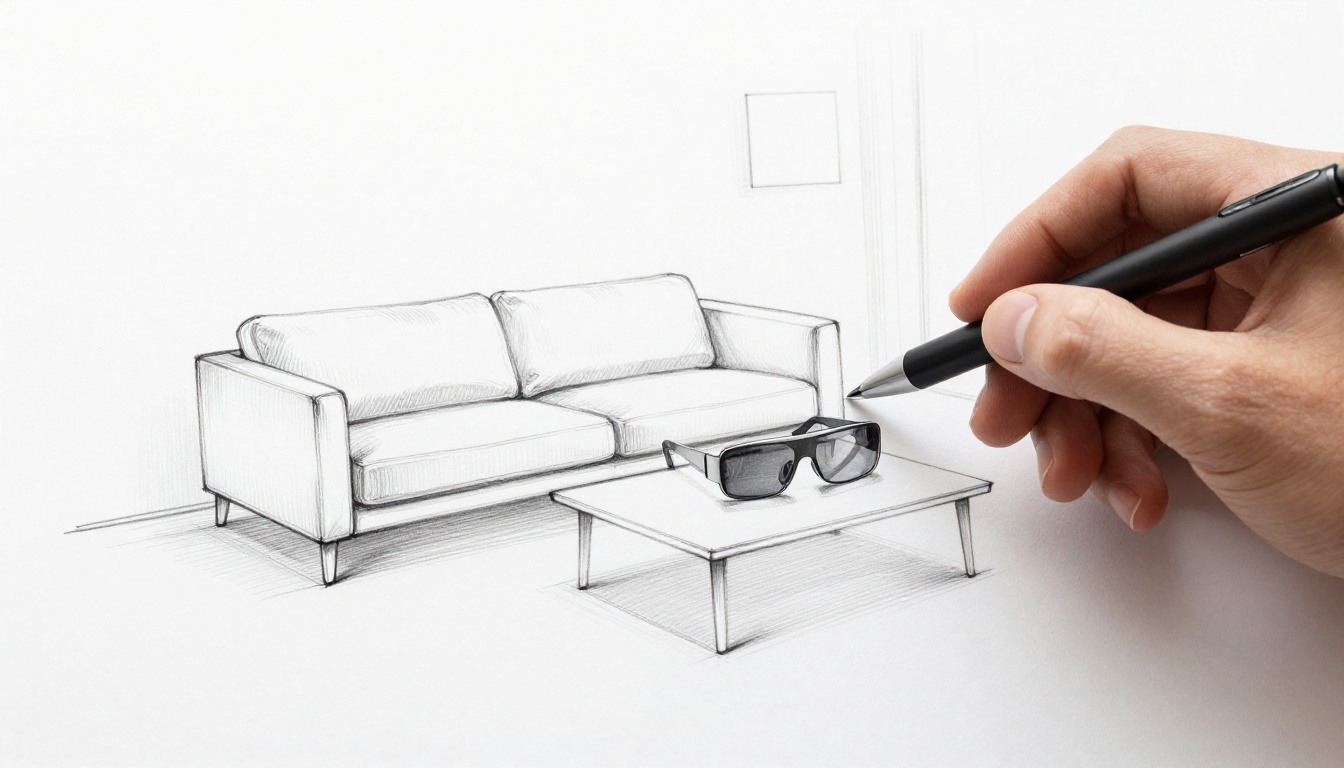
Online shopping is great, until the moment you ask, “Will this fit my space?” Returns make it worse. You wait, you guess, then you send it back. That guesswork costs time and money.
Augmented reality (AR) changes the game by placing a product in your real world. You use your phone camera, or sometimes smart glasses, to see what an item looks like where it’ll live. Then you can check scale, style, color, and fit before you buy.
Retailers care because AR shopping can mean fewer wrong orders. Customers care because it feels less stressful. Instead of imagining results, you see them.
And in 2026, AR is getting more practical. It’s pairing with AI for better suggestions, it’s showing up in hands-free wearables, and it’s spreading through social apps. Even so, the main thesis stays simple: AR improves shopping by helping customers try products virtually, it boosts sales, and it personalizes the experience.
Next, you’ll see how AR virtual try-ons reduce doubt. Then you’ll get the stats on how retailers benefit. After that, we’ll look at the most useful 2026 trends shaping retail right now.
Visualize Products Right in Your Home with Virtual Try-Ons
Have you ever ordered a couch online and hoped it won’t dwarf your living room? AR turns that “hope” into a real look. With a phone camera, you can place a digital couch, chair, or lamp in your room. You can move it around, rotate it, and check how it sits with your walls and floors.
That matters because shopping isn’t just about looks. It’s also about size, spacing, and light. A sofa might look perfect online, but it can feel wrong in your home. AR helps you avoid that surprise.
Here’s what virtual try-ons usually do for you:
- Show the product in your room, at a more believable scale.
- Let you compare styles without driving across town.
- Reduce “Did I order the right size?” anxiety.
Many studies and retailer reports point to big impact. Shoppers are often about 80% more likely to buy after trying virtually. Returns can drop too, with some figures showing around 58% fewer returns when customers use AR. Those numbers make sense. When you see it in your space first, you buy with more confidence.

A fun extra benefit shows up in engagement metrics. In many AR pilots, the experience increases time spent and interaction, with one commonly cited result of about 45% higher engagement. People don’t just “view” the product. They play with it. Then they feel ready to commit.
AR works best when you stop guessing and start checking. That small shift can save a lot of returns.
Want a quick example? Imagine placing a couch in your living room. If it blocks the walkway, you’ll notice fast. If the color clashes with your rug, you’ll spot it before checkout.
Furniture Shopping Made Easy with Apps Like IKEA Place
Furniture shopping has one big problem: most listings don’t match your room. AR fixes that by letting you do a real-life test at home. With apps like IKEA Place, you scan your space and place virtual furniture on your floor. You can check how it fits, then adjust until it feels right.
IKEA’s approach has been covered widely since the launch of IKEA Place. For context on how the app works, see IKEA Launches IKEA Place, a New App that Allows People to Virtually Place Furniture in Their Home. Coverage like this helps show how retailers use AR to reduce mismatch between online images and real rooms.
In practical terms, here’s what you do:
- Open the AR app and choose a product.
- Point your phone camera at your room.
- Place the item where it will go.
- Move it, rotate it, and check the scale.
The payoff is confidence. Instead of “This looks about right,” you get “This actually works here.” That’s especially helpful with big buys like sectionals, dining sets, or storage units.
Another benefit often shows up after purchase. When customers feel sure the product fits their space, they tend to order again. Some retailers and analysts describe repeat purchase behavior that can double when virtual placement reduces wrong buys. Even if your numbers vary, the logic holds. Less buyer regret usually means more follow-up orders.
Picture this moment: you place a sofa, then rotate it to face your TV. You try it near the window. You decide which layout leaves enough walking room. That’s not a gimmick. It’s the kind of planning you’d do in a store, just at home.
Try Makeup and Clothes Without the Mess from Sephora and Nike
Fashion and beauty shopping bring their own hurdles. Makeup needs the right shade. Shoes need the right fit. With AR, you can test both without the mess.
Virtual makeup that matches your face tone
Sephora’s Virtual Artist is a well-known example. It uses your phone camera to map your features and overlay makeup shades. That makes it easier to test lip colors and see a closer result before you open a box.
Sephora also added AI-based color help over time. If you want a quick look at that evolution, read Sephora’s Virtual Artist app now includes AI-powered color matching. Updates like this push AR from “just try it” toward “try it with smarter matching.”
Shoppers respond to the fun side too. Many reports cite that about 65% of shoppers find AR try-ons more engaging than standard product pages. That engagement matters because beauty buyers often want confidence. They want to avoid wasting time on a shade that looks wrong once applied.
AR shoe fit that helps you order the right size
Shoes are where returns can get expensive fast. Nike has explored AR tools that measure your feet and improve sizing confidence. One clear example is covered in Nike’s new app uses AR to measure your feet to sell you sneakers that fit.
With shoe AR, you’re usually doing a quick scan. Then the app helps you choose a size that matches your measurements. When sizing gets easier, fewer customers end up with the wrong pair.
In many virtual fitting experiences, return reduction estimates land around 58% fewer returns, especially for categories like apparel and shoes. The exact number varies by retailer, product type, and region, but the direction is clear: better fit equals fewer returns.
AR also fits social shopping habits. Many shoppers share what they tried with friends. That turns one person’s test into a mini product review. It’s not just tech, it’s social proof in motion.
Watch Sales Skyrocket and Customers Stick Around Longer
Retailers don’t adopt AR just to look cool. They adopt it because it can boost revenue and lower waste. When customers see products in context, they choose faster. They also choose with fewer mistakes.
Market forecasts back up the momentum. One estimate places AR in retail at $89 to $125 billion globally in 2026, with steady yearly growth. That growth aligns with how widely retailers are rolling out AR features for engagement and purchase help.
For a deeper view of market sizing, see AR in Retail Market 2026–2035 | Analysis & Growth Drivers.
Here’s where AR often changes outcomes:
- Higher conversion: confidence rises, so checkout feels safer.
- More time on site: shoppers interact more, not less.
- Fewer returns: fewer bad fits and fewer “not like the photo” surprises.
In some retailer studies, AR shoppers spend about 45% more time on site. That extra time isn’t random. It comes from trying different styles, checking placement, and comparing looks.
If you’re thinking about traditional carts, here’s the contrast. In a regular online flow, you browse images, then guess. In an AR-enabled flow, you test a product on your real setup. Then you buy. That shift changes the whole tone of shopping.
Traditional vs AR shopping experience
Here’s a simple comparison that shows the real difference.
| Step | Traditional online shopping | AR-enabled shopping |
|---|---|---|
| First check | Product photos and specs | Product appears in your space or on your face |
| Doubt point | “Will this fit?” “Will it match?” | “Looks right here, so I’ll order” |
| Return risk | Often higher from mismatch | Often lower from better pre-checks |
| Customer feel | Uncertainty and waiting | Confidence and control |
The takeaway is straightforward: AR can turn browsing into decision-making.
Real Stats Proving AR’s Power on Purchases and Loyalty
If you’ve ever seen the same product on two sites, you know how thin the difference can feel. AR gives retailers something harder to copy: an experience that answers the customer’s real questions.
A few commonly cited metrics show why.
- 80% more likely to buy after virtual trying.
- 65% more fun for shoppers compared to standard browsing.
- 58% fewer returns in categories like apparel and furniture.
- Double repeat buys when virtual fit reduces regret.
Hardware growth also supports the trend. Real-world reporting suggests the AR hardware layer is rising quickly, which means more customers can access AR features without extra work.
These results don’t only help big chains. Smaller boutiques can use AR for limited collections, too. Even a single AR try-on option can cut the “wrong order” problem. When you sell fewer items, you can’t afford high return rates.
Imagine a small online fashion shop adding a simple AR try-on. Customers can test multiple shades in minutes. They’re more likely to pick one color they trust. That trust can show up as better loyalty, not just one sale.
AR doesn’t replace your products. It replaces the guesswork around them.
So, if you’re a retailer, AR becomes a customer service tool. If you’re a shopper, it becomes a confidence tool. Either way, the numbers keep pointing in the same direction.
Fresh 2026 Trends Blending AR with AI and Wearables
In 2026, AR isn’t standing alone. It’s blending with AI, hands-free devices, and social platforms. The goal is simple: make shopping feel more personal, and help people decide faster.
On the AI side, the big upgrade is better matching. Retailers use AI to recommend items based on your preferences and browsing patterns. In some setups, AI helps power more accurate virtual fit experiences, not just generic overlays.
Wearables are also moving forward. Real-time reporting points to smart glasses as a major driver of hands-free AR shopping. Instead of holding up your phone, you can see virtual items while you move. That matters in store aisles, where speed and clarity help.
Social commerce pushes AR into places that don’t look like “shopping apps” at all. Some brands use AR experiences inside social platforms and other interactive apps. That approach encourages sharing, and sharing turns into discovery.
Meanwhile, AR is expanding beyond fashion and furniture. Grocery stores can use AR for hyper-local picks. Shoppers might scan shelves to get recipe guidance or quick info. Cars and dealerships also use AR to visualize options like color and features.
Another trend: competition across regions. China-based retail pilots often move fast with AR pop-ups and immersive setups. US retailers tend to focus on combining AR with AI personalization and loyalty programs.
For additional context on what’s shifting in AR devices and retail wearables, see 7 AR Shifts In 2026 That Upend Retail, Wearables, And Ads – Here’s Why.
The result is a more connected shopping flow. Not only at checkout, but before it, during it, and after it.
How Smarter Glasses and Apps Personalize Your Picks
Traditional AR try-ons are useful. Still, 2026’s twist is personalization. Instead of showing the same options for every shopper, apps can tailor the experience.
Smarter AR apps often combine three things:
- Your measurements or scan data for fit.
- Your style choices for recommendations.
- Real-time context for what looks right.
Smart glasses push this further. Because you’re not holding a phone, you can keep your hands free. You can browse while you walk. Retail staff can also support you faster if the system ties into product info.
In addition, marker-less AR keeps things simpler. Some reporting suggests marker-less AR holds a strong share of the market. That means fewer “place this card” moments. Instead, you can point and go.
For shoppers, that translates to less friction. You test, you compare, and you decide. For retailers, it means you can show the right products to the right people at the right time.
AR is also more useful when it ties into the rest of the shopping journey. A try-on can lead to product details, then to availability, then to checkout. When that flow feels smooth, customers come back.
The best part is what you might not notice at first. AR reduces mental load. You spend less energy worrying about fit and color. Then you focus on what you actually want.
Conclusion
Online shopping shouldn’t make you play guessing games. AR in retail helps by letting you try products virtually before you buy. That can reduce uncertainty around size, shade, and placement.
The results add up. Virtual try-ons can increase purchase confidence, and they can reduce returns when shoppers see items in context first. Retailers also benefit from stronger engagement, including more time on site and more repeat buying over time.
AR in 2026 keeps moving in practical directions. AI improves matching, social tools make sharing easy, and wearables like smart glasses help shoppers stay hands-free.
If you’ve been stuck with “hope it fits” orders, try an AR shopping app the next time you buy something big. Take a screenshot of what you see, and share it with a friend who always asks, “Does it look right in your place?”