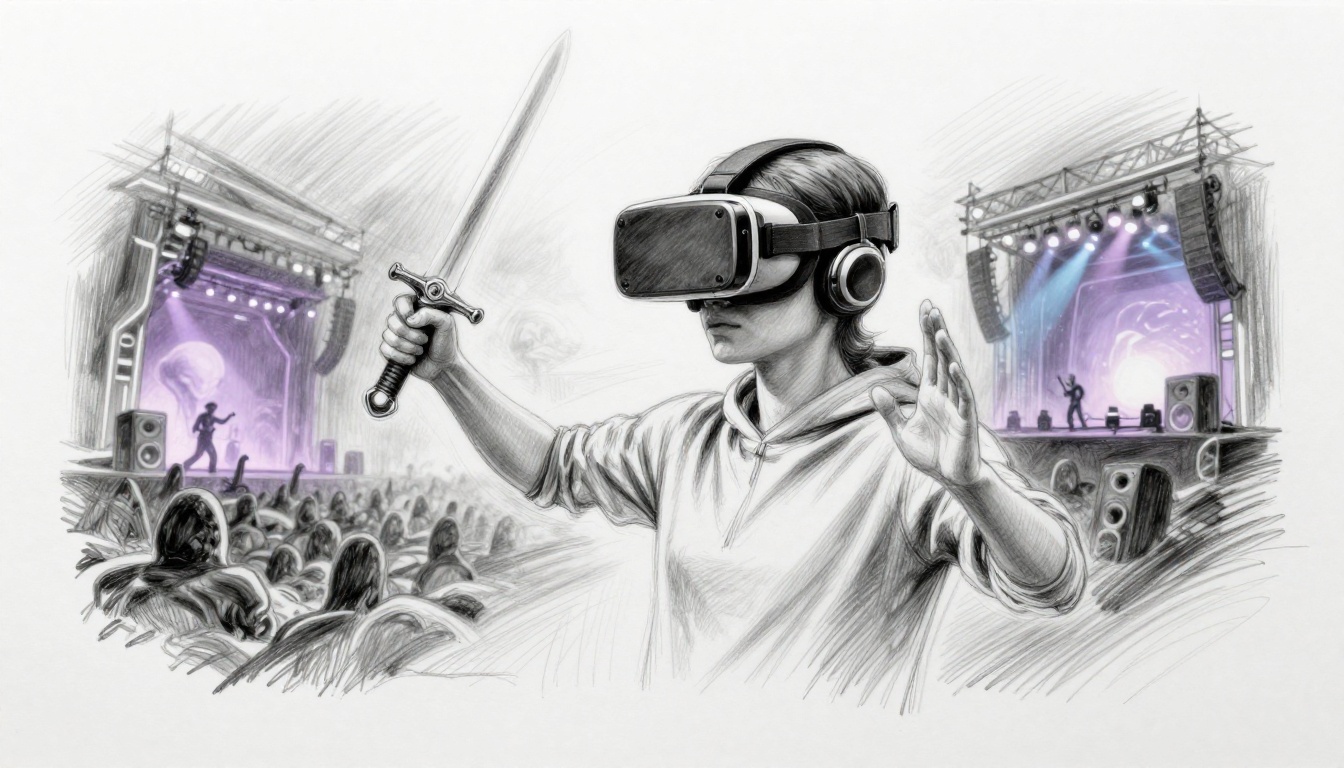
Step into a world where you can fight aliens, swing a sword, or stand in the front row of a concert. That’s VR in gaming at its best. A VR headset tracks your head and hands, so 3D worlds feel like they’re around you, not on a screen.
For gaming, the big win is simple: you move for real. Instead of clicking buttons, you duck, aim, swing, and dodge. As a result, VR can feel more intense and, for many players, more like a workout.
For entertainment, VR entertainment uses go past “watching.” You can experience live-like events, explore 360-degree videos, and join social spaces where people hang out together. In short, VR turns passive moments into something you do.
If you’re curious what’s actually popular right now, the answer depends on your platform. Meta Quest is great for easy plug-in play. PSVR2 suits players who want console-friendly VR. SteamVR is where high-end PC setups shine. And as of March 2026, VR games and event-style experiences keep growing across all three.
Next, let’s look at the main ways VR shows up in gaming, from story shooters to multiplayer chaos.
How VR Takes Gaming to the Next Level
VR gaming isn’t just “more realistic graphics.” It changes the way you play, because your body becomes the controller. When your hands can aim, grab, and gesture, games stop feeling like remote activities. They feel physical.
In practice, VR gaming uses show up in a few clear patterns. Immersive gameplay often means you move through 3D spaces, explore rooms, and interact with objects. Combat can turn into full-body dodging. Exploration can feel like you’re actually walking through a world.
Multiplayer also plays a major role. In many VR games, you don’t just compete, you react to each other. That makes teamwork feel closer, and it can make rivalries more memorable.
Here are examples of VR gaming uses you can see right away:
- Movement-first shooters where aiming and reloading require body control
- Rhythm games that read your swings and timing
- Social tag and sports games where you learn spacing fast
- Co-op missions that reward teamwork under pressure
Popular VR gaming platforms support these styles differently. Meta Quest is often the simplest entry point, since many titles run standalone. PSVR2 gives PlayStation players a smooth console path. SteamVR supports a wide PC VR library and can bring strong performance when you have the hardware.
If you want a snapshot of what’s getting attention across platforms, a roundup like Everything Announced at the Spring 2026 VR Games Showcase is a good place to spot new trends. It also helps you track what’s coming for the rest of 2026.
Competitive scenes have grown too, with titles like Nock and DISC pulling in players who love skill-based matches. Meanwhile, fitness is part of the appeal for a lot of people. Even casual sessions can burn calories because VR asks you to stand, rotate, and move.
Top VR Games You Can Play Right Now
Some VR games stick in your mind because they feel physical. Half-Life: Alyx is one of the best examples. It blends story and pacing with hands-on combat, so every weapon feels like a real tool. It’s less about “spray and pray,” and more about reacting fast.
Rhythm VR is another standout category. Beat Saber remains a top pick because it turns timing into motion. You don’t just watch notes fall. You swing at the beats, and your body learns the pattern. For a similar vibe, Pistol Whip pushes you through action lanes where music and gunfire sync up.
Multiplayer social games can be the most fun when you want zero pressure. Gorilla Tag is famous for its simple premise and high skill ceiling. You move like a gorilla, then try to tag opponents. It’s silly at first, then surprisingly intense.
Below is what that “move to the beat” feeling looks like in VR.

If you’re hunting for current favorites, it helps to compare lists across platforms. Reality Atlas keeps an updated view of what ranks near the top, including hits on Quest, PSVR2, and PC VR, in Best VR Games of 2026: The Definitive Ranking.
One more detail matters. Many VR games have easy “drop in and play” loops. Social games can bring in daily players, because someone is always hosting an event or running a session with friends.
Upcoming Games to Watch in 2026
As of March 2026, new releases keep leaning into co-op, sports, and action that feels built for VR. Recent updates show a clear pattern: games that support quick sessions plus longer progression tend to keep players coming back.
From the March 2026 wave, here are some titles people are watching:
- Iron Guard Salvation (PSVR2, March 5): Sci-fi tower defense with robot waves
- DrumBeats VR (PSVR2, March 6): Rock out on a full drum set
- SkyLeap (PC VR and Quest, March 15): Fast parkour movement
- Orbital Overdrive (PC VR, March 16): Roguelite shooter with upgrades
- VMX (PC VR early access, March 26; Quest later): Gesture-based motocross tricks
- Shop & Stuff (PSVR2, March 27): A fun shop simulation vibe
For what’s coming next, the Spring VR Games Showcase pushed several big names forward. The biggest co-op pull right now is Payday: Aces High. It’s listed for Quest 3 and SteamVR and set for 2026 with 4-player heists.
Next on many players’ lists is Compass, a Spring 2026 title for Quest, PSVR2, and SteamVR. It focuses on ship piloting through clouds and puzzles, which fits VR’s strengths in navigation and interaction.
People also keep an eye on retro action. Wrath: Aeon of Ruin VR is described as releasing in about two weeks from late March, with early April timing for now. Another huge horde-style pick is A Long Survive (April), and it’s positioned for PSVR2 and PC VR with crossplay.
You may also notice more “game plus body movement” titles landing over time. VMX is a good example, because it asks you to physically perform tricks rather than just watch.
Finally, The Boys: Trigger Warning has new gameplay shown around this window. Platforms are listed as TBA, but the general expectation is that it fits action-first VR.
If you want a single source for March hype, Everything Announced at the Spring 2026 VR Games Showcase is the easiest way to track what’s real and what’s coming.
Why Platforms Matter for VR Gamers
VR is not one-size-fits-all. Your headset choice shapes what you play, how easy it is to start, and how smooth things feel.
Meta Quest tends to win for convenience. Many games run as standalone, so you don’t need a gaming PC just to begin. That means you can try VR more often, not only when you have time for a full setup. Quest also gets a steady stream of action and rhythm titles, including updates and new launches like Space Control and other March releases in the broader ecosystem.
PSVR2 shines for players who want console flow and strong first-party support. If you’re focused on PSVR2 specifically, IGN has a living list of The Best PS VR2 Games to Play in 2026. It’s helpful because it filters for games you can actually buy and play on that platform.
Then there’s SteamVR (PC VR). If you have the hardware, PC VR can deliver high-end visuals and a broad library. It also tends to support a faster pipeline for early access titles. That matters for players who like testing new mechanics early, like some VR roguelites and action prototypes.
Here’s the real takeaway: the best VR platform for you depends on how you want to spend your time. If you want quick sessions, go Quest. If you want console stability, go PSVR2. If you want maximum choice and performance, go SteamVR.
One more benefit shows up often: crossplay. When it works, it expands your matchmaking pool. It also makes social VR more active, since friends can play even if they own different setups.
VR’s Role in Bringing Entertainment Alive
VR entertainment uses focus on presence. You’re not only watching a stage from far away. You feel like you’re there because your view shifts with your head.
That’s why VR concerts and VR sports clips work so well. In many experiences, you can look around at the crowd, see performers from multiple angles, and feel like you’re standing close. Even if it’s not a “real-time” concert, it can still feel lived-in.
VR also fits immersive movies. Some formats let you look around scenes while audio and pacing keep going. Instead of being “stuck” with a fixed camera, you can scan the world.
Then there are theme park-style experiences. These mix virtual attractions with real-world expectations. You feel speed, movement, and surprise moments, without needing tickets for a physical trip.
Social VR adds another layer. You can meet people, talk in real time, and join events. Platforms like VRChat and Rec Room work as communities, not just apps. People host hangouts, mini-games, and themed parties.
If you want a practical way to explore VR concerts, check out Best VR concerts in 2026 – Digital Residency. It’s a helpful starting point for what’s currently getting staged.
Most importantly, VR entertainment can connect you to places you can’t easily reach. Someone else can be on the other side of the map, and it still feels like you’re in the same space.
Experience Concerts and Events Up Close
VR concerts are popular because they solve a common problem. If you can’t get tickets, you often feel left out. VR offers a “front row” substitute, even when it’s a 360 video stream or a recorded performance.
Front-row feel doesn’t mean it’s perfect. The audio mix, crowd energy, and camera timing still matter. However, the head tracking helps a lot. You look left, you see more of the venue. You turn toward the performer, and the scene feels more responsive.
VR also supports event styles beyond music. Some worlds host parties with shared activities, like dance challenges or scheduled shows. Others use audience movement to shape the vibe.
Metaverse-style gatherings can feel playful and low-pressure. That matters if you just want something fun after work. Instead of staring at your phone, you’re present in a shared moment.
Meanwhile, 360-degree sports experiences can bring real excitement. When you can look around the field, it feels more like “being there,” even if the action plays out on a fixed timeline.
If you’re exploring concerts for the first time, start with a simple goal. Choose one artist or one venue, then stick with it. That way, you’ll learn how VR changes perspective without getting overwhelmed.
Social Worlds Where Friends Meet Virtually
Social VR is where VR in entertainment becomes less about content and more about people.
In VRChat, you can customize avatars, explore user-made worlds, and join events. The best sessions often feel like community hangouts. One night you might play mini-games, and another night you might attend a themed gathering.
Rec Room offers a similar social vibe, but with a more guided experience. It also supports co-op play and party-style game modes. If your friends want structure, these apps can feel easier to jump into.
Why does social VR matter for entertainment uses? Because it creates a reason to return. A movie ends. A concert ends. A chat room or shared world can keep going as long as people show up.
You also get a practical benefit. VR can make long-distance friendship feel more active. Body language becomes clearer, even through a stylized avatar. You can wave, gesture, and stay closer in the moment.
There’s still one thing to keep in mind. Comfort settings matter. If you’re new, start with smooth movement off, and use teleport options where available. Then build from there.
Movies and Theme Parks in VR Style
VR movies can feel like standing inside a scene. With 360-degree video, you can scan the environment, and your attention follows what you choose to see. That changes how stories land, because you control the gaze.
Immersive films also work well for travel vibes. You can look around a location, then focus on specific characters when they enter your view. It’s not the same as live action, but it’s closer than a flat screen.
Theme park style VR goes further. Instead of watching an attraction, you ride it. Some experiences simulate fast movement, while others focus on interactive moments. For example, you might reach out to trigger effects. Or you may look up at “stage elements” that react to where you stand.
These VR entertainment uses can also blend with real theme parks. Some venues pair physical locations with virtual add-ons. Other experiences recreate arcade-like attractions in a VR space. The goal stays the same, though: give you the sense of being in a place that moves around you.
If you’re planning VR entertainment for groups, theme park style rides can be a strong choice. Many of them are easy to understand quickly. Plus, the shared reaction moments help people stay engaged, even if they don’t play games.
Still, comfort matters here too. Sudden motion and intense acceleration can make some players feel sick. If you get motion discomfort, choose experiences that let you control movement speed.
Fresh Trends Shaping VR’s Future in Fun
March 2026 feels like a transition period. VR keeps growing, but the focus shifts from “wow once” to “fun often.” You see that in co-op missions, rhythm updates, and social spaces that keep events running.
One major trend is more multiplayer focus. Co-op heists and group FPS modes help people stay longer. They also make VR feel social by default, because you can’t play alone the same way.
Another trend is better support for different players and setups. Crossplay and flexible platform support show up more often. That means friends can join you even if they own different headsets.
Haptics and performance improvements also matter. Better controllers and tracking make interactions feel more believable. Even small upgrades can reduce friction during play, like faster aiming or more stable hand tracking.
Fitness blends keep expanding too. Games that tie movement to scoring turn exercise into play. Some players return daily just to hit their rhythm targets, or to run short sessions that feel like training.
If you want a broad look at where VR trends may go next, tech roundups can help. For example, Top 6 Virtual Reality Trends of 2026 — The Future of VR Technologies Blog gives a quick overview of common industry directions people are talking about.
Market growth also supports more content. A report listing on Metaverse In Gaming Global Market Report 2026 suggests continued spending and interest, which usually leads to more experiments and new releases.
Looking ahead, the most likely growth areas for VR in entertainment are social events and repeatable experiences. Concerts will keep evolving, but the biggest long-term stickiness comes from communities.
And that brings us back to gaming. The games that win tend to be the ones that make you feel present, then keep you coming back with friends.
Conclusion
VR in gaming and entertainment works because it gives you a new kind of presence. In gaming, VR makes action physical, from immersive shooters to rhythm games like Beat Saber. On top of that, multiplayer titles turn “playing” into a shared activity.
In entertainment, VR concerts, 360 movies, and social worlds help you feel like you’re there. You’re not stuck watching from the sidelines. You look around, react, and connect.
The trend for March 2026 is clear: more co-op fun, more social events, and more comfort-focused improvements. If you want to feel it for yourself, try a VR headset and pick one experience you can return to this week.
What’s your favorite VR moment so far, gaming or entertainment? Share it in the comments, and keep exploring what’s next.