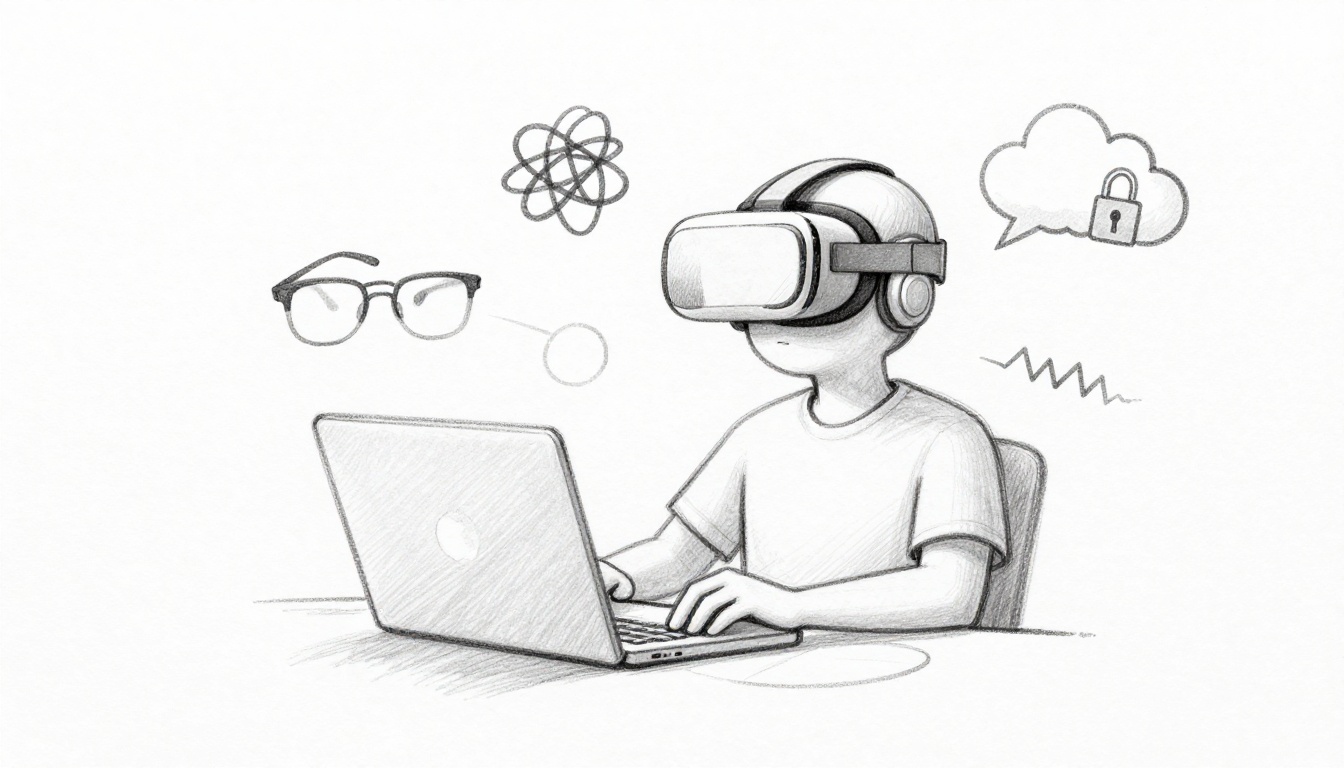
VR and AR are everywhere in 2026 newsfeeds, but real use still lags behind the hype. Shipments are climbing fast, with about 87.7 million AR and VR units expected by 2026, and 171 million VR users worldwide today. Even in the US, around 48% of consumers have tried VR and about 13% of US homes own a headset.
So why don’t these tools feel normal yet? The VR and AR challenges in 2026 aren’t just “tech progress” problems. You keep running into hardware bulk, health tradeoffs, thin everyday content, high costs, privacy fears, and annoying glitches like latency and battery drain. In other words, lots of people buy in, then stop using.
Let’s break down the obstacles that still hold VR and AR back, and what they mean for where these devices go next.
Hardware Struggles Making VR and AR Devices Impractical
Headsets look sleek in demos. In daily life, they’re harder to ignore. Even standalone models still feel bulky, and you often need updates or accessories to get smooth performance.
For many people, the experience ends up like wearing a bike helmet indoors all afternoon. It works. But it’s not fun. As a result, “try it once” turns into “use it at work, then put it away.”
Processing limits add another layer. Mixed reality needs to understand your room while also rendering virtual objects. That takes power, which drains the battery faster. Some AI features help with tracking, but they don’t magically fix the physics of heat, weight, and power draw.
The trend in 2026 is mixed. Reviews show steady improvement in comfort, pass-through video, and controller tracking. However, core constraints remain. If the device can’t stay comfortable and stable for an hour, most users won’t build a habit.
Bulky Designs That Weigh You Down
Comfort is one of the most repeated complaints in 2026 headset reviews. Even “light” headsets can feel heavy after short sessions. The reason is simple. Weight sits on your face and straps around your head.
Imagine strapping a few extra pounds to your face and trying to look around naturally. Your neck adapts for a few minutes. Then you start shifting posture. Soon, the session feels like a chore.
This also changes what VR and AR can be used for. Mixed-reality headsets tend to fit best in structured work settings. For home, people expect casual fun, quick check-ins, and spontaneous use. Bulk breaks that rhythm.
AR glasses face their own fight with size and form factor. A lot of devices still require cables, a battery pack, or a tight fit that makes long wear feel tiring. For example, some early reviews call out battery issues in AR glasses, even when the display idea looks promising, like in coverage of the RayNeo X3 Pro’s battery limitations on Tom’s Hardware.
Battery Life and Processing Power Falling Short
Battery life can ruin the moment. In VR, you want to stay immersed. In reality, you keep checking charge level.
The better the graphics and the smarter the tracking, the more power you use. That’s why long training sessions and games often get cut short. Even when performance improves, the cost shows up as heat and faster drain.
Processing power also matters for comfort. If the system can’t render smoothly, motion can feel delayed. That can lead to worse nausea. It also harms the “it feels real” effect that makes VR exciting at first.
So, a user starts a session with hope, then hits a wall. Either the battery drops too fast, or the experience stutters when the room gets complex. As a result, people don’t trust VR and AR with their time.
A headset can be impressive for 10 minutes and still fail as a daily tool.
Health Risks Turning Immersion into Discomfort
VR and AR aim to trick your brain. Unfortunately, your body doesn’t always agree.
The big issues are eye strain, motion sickness (often grouped under “cybersickness”), and general fatigue. In 2026, manufacturers still don’t have a single fix that works for everyone. Many users respond by shortening sessions and using the devices only when they feel up to it.
And when you don’t feel good, you stop using the device. That one behavior shift shapes the market. It keeps adoption slow, especially among casual consumers.
Motion Sickness and Eye Strain Effects
Motion sickness is common when visual motion doesn’t match what your body feels. That mismatch can happen during fast movement, teleporting, or even watching smooth animations.
Eye strain follows for a similar reason. Your eyes work hard to focus on a screen that sits close to them. Add head movement and changing focus cues, and fatigue builds faster than most people expect.
Studies and reviews keep pointing to cybersickness as a real barrier. For a medical-style explanation of eye-related concerns, the American Academy of Ophthalmology summarizes what to watch for in Are Virtual Reality Headsets Safe for Eyes?.
In the meantime, the workaround is boring but effective: short sessions, slower movement, and better settings. Still, it’s not the “put it on and forget it” experience people want.
Fatigue from Constant Body Tracking
AR and VR systems track head movement and body motion to keep the illusion stable. That sounds helpful, and it is. Yet constant monitoring can make sessions feel exhausting.
For VR, users often tense their posture to stay aligned with the virtual world. For AR, you might keep turning your head to find the “right” view. Over time, that feels like mental and physical workload, not play.
This fatigue also matters at work. Training can last longer than one break. If users feel worn out early, they won’t repeat the training schedule. So the tech ends up limited to shorter sessions, even in enterprise settings.
Scarcity of Killer Apps and Slow User Adoption
Hardware is only half the story. The rest is simple: users need apps that feel like must-haves.
Right now, many VR experiences still feel like “niche media.” You can try them. But you don’t depend on them daily. That’s a big deal, because habit turns a device into a product.
Meanwhile, enterprise tools grow steadily. Companies invest in VR and AR training, safety drills, and simulations. Those uses fit real budgets and measurable outcomes.
But that doesn’t spark a consumer boom. It also explains why the market grows without turning into mainstream entertainment. The content just doesn’t match the moment-to-moment expectations people have from phones and consoles.
Missing Everyday Apps That Hook Users
Think about your phone. What do you open without thinking?
Most VR and AR users don’t have that kind of routine yet. There’s no clear equivalent to social apps that always pull you back. There’s no “daily habit” category that feels as simple as scrolling, messaging, or watching.
So VR use stays event-based. People pull out headsets for specific games, workouts, or demos. Others avoid them because the list of must-do apps stays short.
At the same time, enterprise content keeps expanding. That contrast makes adoption look uneven. Users see growth signals, but they don’t see daily reasons to wear the gear.
Enterprise Focus Over Home Entertainment
Businesses adopt because they can measure results. VR and AR can reduce training risk and speed up certain learning loops. For example, factories use spatial training for equipment handling. Healthcare teams test workflows in safer simulations.
However, that focus changes what people experience at home. Consumer apps often lag behind. Businesses also want stability, support, and clear integrations with existing systems. That slows down the “fun” side of the market.
Enterprise XR adoption also shows a pattern of moving from pilots to infrastructure in 2026. Reality Atlas highlights that shift in its overview of Enterprise XR Adoption 2026: Industries Leading the Charge. Still, enterprise momentum doesn’t automatically translate to consumer excitement.
The tech may be ready. The apps still need to feel necessary.
High Costs, Privacy Fears, and Lingering Tech Glitches
Even if you want VR and AR, price and trust issues can stop you. For enterprises, costs can be easier to justify. For home users, the math is harder.
There’s also privacy. AR devices can capture your room, your movements, and your gaze direction. That data can be personal. It can also reveal things about bystanders nearby.
Then come the “annoyance” bugs. Latency can break immersion. Integration problems can make workflows slow. Haptics can feel delayed or inconsistent. None of these sound dramatic alone, but together they wear down confidence.
In 2026, these friction points still block mass adoption.
Price Barriers Keeping Gear Exclusive
Prices dropped in some segments, and companies get better deals at scale. Yet mainstream consumer pricing is still a stretch.
Most home buyers don’t want to treat a headset like a hobby purchase. They want it to feel like an everyday tool, with low risk and clear value.
So even if the latest models are cheaper than past generations, they’re not cheap enough to erase hesitation. That keeps device ownership concentrated among early adopters and enthusiasts.
Privacy Risks from Non-Stop Data Collection
AR glasses can collect more than what you see. They can track head and eye direction. They can also map your surroundings.
That raises two concerns. First, what happens to your data after collection? Second, what about the people around you?
In shared spaces, bystander privacy becomes messy. Users might not know what gets recorded. They also might not control what gets stored. Until these issues feel safer and clearer, adoption stays cautious.
Latency, Integration, and Other Tech Hiccups
Latency is one of those problems you notice once and never forget. Even small delays can make motion feel wrong. That can worsen nausea and reduce trust.
Integration also matters. A device might work well in a demo and still struggle with real workflows. Setup steps, app compatibility, and device management can create time drains.
Finally, power and touch feedback create extra complexity. Better tracking helps, but it increases processing needs. More features can mean more ways for something to fail during a session.
These glitches don’t just frustrate users. They slow repeat use. And repeat use is what turns “cool tech” into a normal habit.
A realistic path forward for VR and AR in 2026
VR and AR face a tough mix of challenges in 2026: bulky hardware, health tradeoffs, thin everyday content, and the extra friction of privacy and cost. On top of that, latency and integration hiccups still break immersion when you need it most.
The good news is that shipments and adoption keep rising. Businesses keep pushing use cases like training and simulations. Also, AI-assisted tracking and improved device designs are slowly making experiences smoother.
If you want VR and AR to grow beyond hype, the next wins have to feel practical. Will comfort improve enough for longer sessions? Will privacy controls become clearer and safer? Those answers decide whether the next wave sticks.
Where do you think VR and AR should focus next, comfort, killer apps, or privacy?